Table of Contents
- So What's the Best deadlinefunnel Alternative?
- The Features Are Almost the Same. The Experience Isn't.
- Who's Actually Behind These Tools?
- Deadline Funnel Pricing vs loopOffer Pricing (2026)
- Deadline Funnel Alternatives That Work With AWeber, Kit, Flodesk and More
- Other Deadline Funnel Alternatives Worth Knowing About
- So, Which One Should You Use?
- Frequently Asked Questions
- Is loopOffer a good alternative to Deadline Funnel for email marketers?
- What's the difference between evergreen and fixed deadlines?
- Why use a tool like loopOffer instead of just using promo codes from your payment provider?
- How much does loopOffer cost compared to Deadline Funnel?
- Can I try loopOffer before paying?
- Is there a Deadline Funnel lifetime deal or AppSumo offer?
- Is there a Deadline Funnel coupon code that actually works?
- Does loopOffer work with AWeber?
A while back I was trying to figure out how to run proper email offers for my online course. Not a generic sale blasted to everyone. The kind where each subscriber gets their own deadline, depending on when they joined my list.
So I did what most people do. I looked at what the bigger creators were doing, and Deadline Funnel kept coming up. Every search I ran, spelled as two words or one, deadlinefunnel, led back to the same tool.
I signed up and started poking around. And pretty quickly, I ran into three problems.
First, it wasn’t intuitive. The setup assumed you wanted to show a timer on your website, and you already knew what you were doing and had a full funnel to wire it into.
Second, the pricing wasn’t built for someone like me. There was no plan that made sense for a smaller creator just getting started with evergreen offers.
Third, I found out that it’s owned by a private equity… meh..
So I built loopOffer, a Deadline Funnel alternative for people who sell through email.
This isn’t a neutral review. I own loopOffer. But I’ve tried to be fair about where deadlinefunnel is genuinely better, and I’ll name the other alternatives too.
So What’s the Best deadlinefunnel Alternative?
The short answer: if email is where you actually sell, loopOffer. If you run webinar funnels and complex multi-page sales flows, stick with Deadline Funnel.
Here’s what that means in practice:
- Cheapest entry point: loopOffer at $25/month vs Deadline Funnel at $49/month
- Fastest setup: create a campaign, add a trigger in your email tool, drop a script on your checkout page
- No card to try it: 14 days free, no credit card, no “confirm your billing details” dance
- Works with what you already use: Kit, Kajabi, Flodesk, Brevo, MailerLite, AWeber, beehiiv, ActiveCampaign, Klaviyo, Mailchimp, Drip, Constant Contact and GetResponse
And yes, I built it. Which is exactly why I’m going to spend the next few sections telling you what Deadline Funnel does better, and which other alternatives are worth a look.
Fair? Good. Let’s dig in.
Watch my video about loopOffer or keep on reading:
The Features Are Almost the Same. The Experience Isn’t.
Both tools do the same core thing:
- give every subscriber their own personal deadline,
- track who clicks, and
- redirect expired visitors to a different page.
Real urgency. No resets. No fake scarcity.
Feature-wise, you’re not giving much up by choosing loopOffer. Here’s a quick side-by-side:
| Feature | loopOffer | Deadline Funnel |
|---|---|---|
| Starting price | $25/month | $49/month |
| Free trial without a credit card | ✅ | ❌ |
| Personalized evergreen deadlines | ✅ | ✅ |
| Fixed deadline campaigns | ✅ | ✅ |
| Countdown timers in emails | ✅ | ✅ |
| Sales tracking (not just clicks) | ✅ | ✅ |
| 50+ checkout platform support | ✅ | ✅ |
| Landing page timers (on website) | ✅ | ✅ |
| Webinar funnel integrations | ❌ | ✅ |
| Official Kit app store listing | ✅ | ❌ |
| Email-first setup flow | ✅ | ❌ |
| Cheapest plan | $25/mo | $49/mo ($39 if yearly) |
| Campaigns on the cheapest plan | Unlimited | 3 |
| Number of email tool integrations | 13 | 30+ |
| Owned by | Founder | Private equity (itrinity) |
I made loopOffer for email marketing so you can automate your offers and not rely on fixed date sales (like holiday sales).
You create a campaign, add a trigger in your email tool, install a tracking script on your checkout page. That’s it.
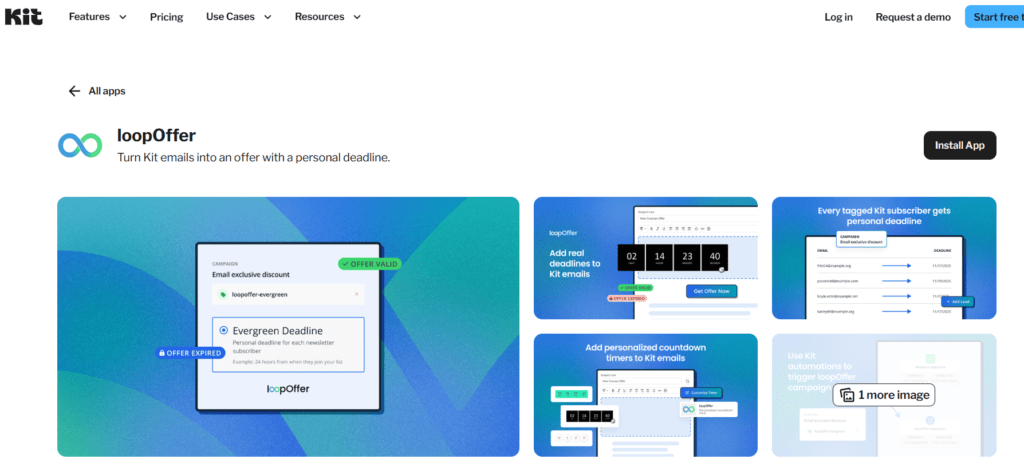
It’s even an official app in the Kit app store, which says a lot about how seriously it’s been built for the email marketing world.
Who’s Actually Behind These Tools?
This is worth a minute of your time.
Deadline Funnel has been around for years, and that track record counts for something. It’s a mature, stable product. But in 2024, the original founder sold it to itrinity, a private equity firm whose tagline is…
and I’m not making this up…
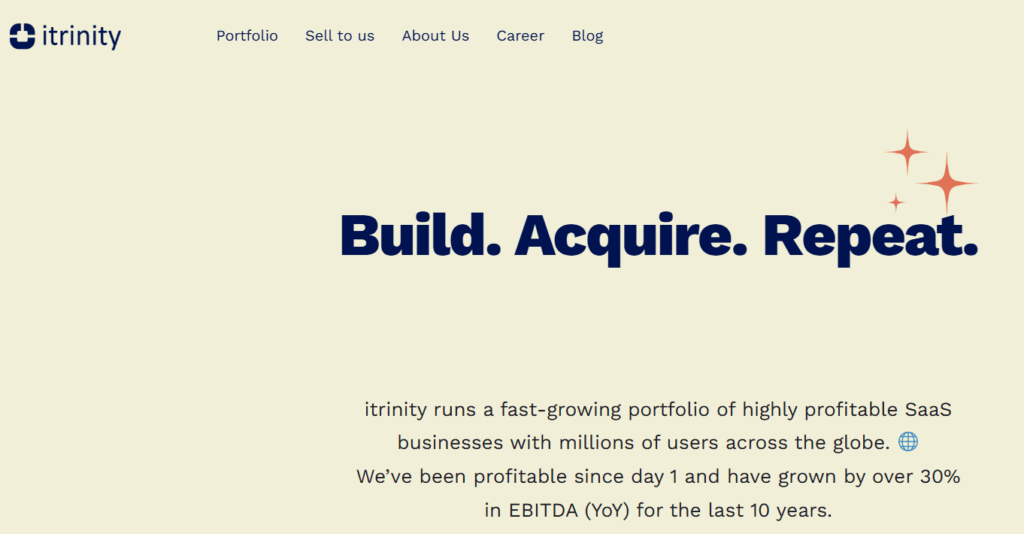
Their model is buying profitable SaaS businesses and optimising them for growth.
That’s not inherently bad. But it does mean Deadline Funnel is no longer an independent product built by someone solving their own problem. It’s a portfolio asset. What that means for pricing, feature direction, and support over time is hard to predict.
loopOffer is fully independent. I built it because I needed it, and I’m still the one answering some of the support emails.
Deadline Funnel Pricing vs loopOffer Pricing (2026)
This is the part most comparison articles get lazy about, so let’s actually put the numbers next to each other.
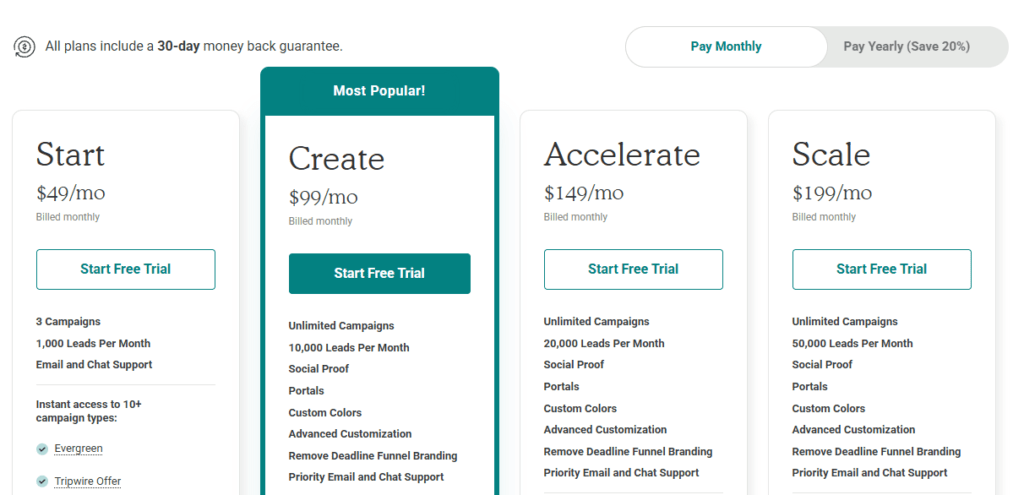
Deadline Funnel has four plans. Prices below are monthly billing, with the annual price in brackets (you save about 20% paying yearly):
| Plan | Price | Leads/month | Campaigns |
|---|---|---|---|
| Start | $49 ($39) | 1,000 | 3 |
| Create | $99 ($79) | 10,000 | Unlimited |
| Accelerate | $149 ($119) | 20,000 | Unlimited |
| Scale | $199 ($159) | 50,000 | Unlimited |
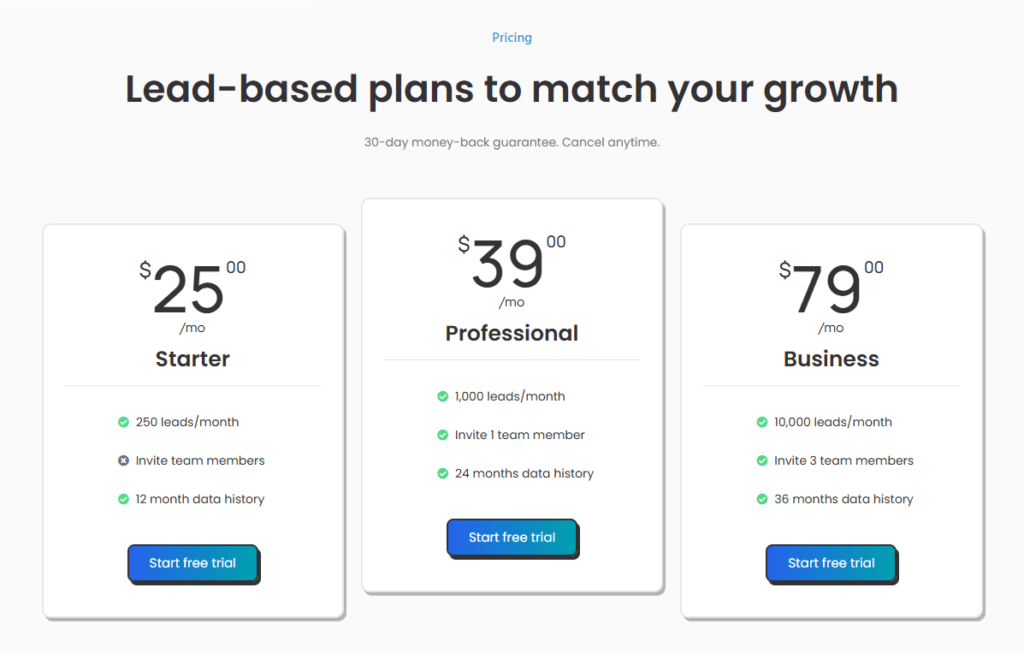
loopOffer has three:
| Plan | Price | Leads/month |
|---|---|---|
| Starter | $25 | 250 |
| Professional | $39 | 1,000 |
| Business | $79 | 10,000 |
So who actually wins on price?
Depends entirely on your list size. And I’m going to be straight with you here, because pretending otherwise is how you lose people’s trust.
If you’re just starting out, loopOffer wins clearly. $25/month for 250 leads is a real entry point. Deadline Funnel has nothing below $49, and if you’re sending 200 people through an evergreen offer each month, you’re paying for 1,000 leads you’ll never use.
At 1,000 leads/month, it’s basically a tie. loopOffer Professional is $39. Deadline Funnel Start is $39 too, if you commit to a year up front. On monthly billing loopOffer is $10 cheaper, but let’s not pretend that’s a dramatic saving.
At 10,000 leads/month, loopOffer Business is $79 and Deadline Funnel Create is $99 ($79 on annual). Same story.
So the honest version is: loopOffer is meaningfully cheaper at the bottom, and roughly the same in the middle. What you’re really choosing on further up the ladder is the setup experience and who picks up the phone, not the price tag.
One pricing detail that catches people out
Both tools count leads per campaign, not per person.
Same subscriber enters three of your campaigns? That’s three leads. Not one.
I mention this because it’s the number one reason people blow through a plan limit faster than they expected. If you run several overlapping offers, do the maths on campaigns × subscribers, not just subscribers.
Deadline Funnel does this. loopOffer does this. Neither of us is hiding it, but almost nobody reads that far down a pricing page.
What about the free trial?
Both give you 14 days and a 30-day money-back guarantee.
The difference: Deadline Funnel wants your credit card before the trial starts. loopOffer doesn’t. If you’ve ever forgotten to cancel something, you’ll know why that matters.
Deadline Funnel Alternatives That Work With AWeber, Kit, Flodesk and More
This is the question I get more than any other. Not “is it good”, but “does it work with my email tool”.
Because here’s the thing about switching tools. Your email platform is the one thing you’re not going to change. You’ve got sequences in there, tags, automations, years of subscriber history. Whatever deadline tool you pick has to bend around that.
So here’s the full list, and how each one actually connects:
| Email platform | How it connects |
|---|---|
| Kit (formerly ConvertKit) | Native, API or OAuth |
| Flodesk | Native, API |
| Brevo | Native, API |
| AWeber | Webhook |
| ActiveCampaign | Webhook |
| MailerLite | Webhook |
| beehiiv | Webhook |
| Klaviyo | Webhook |
| Mailchimp | Webhook |
| Drip | Webhook |
| Constant Contact | Webhook |
| GetResponse | Webhook |
| Kajabi | Webhook |
Thirteen platforms. Three of them native, the rest by webhook.
“Webhook” sounds technical. It isn’t.
A webhook is just a URL you paste into your email tool’s automation. When a subscriber hits that step in your sequence, your email tool pings that URL, and loopOffer goes “got it, this person’s deadline starts now.”
That’s the whole thing. You copy a URL from loopOffer, you paste it into an automation step. No code, no developer, no Zapier subscription sitting in the middle taking a cut.
The practical difference between native and webhook, if you’re wondering:
- Native (Kit, Flodesk, Brevo): you log in once, authorise loopOffer, and pick your list or tag from a dropdown. Slightly fewer clicks.
- Webhook (everything else): you copy a URL and paste it into an automation step. One extra copy-paste, and it works identically after that.
Either way, the setup is the same three steps:
- Create your campaign in loopOffer (offer page in, “offer expired” page in)
- Add the trigger in your email tool that tells loopOffer to add this person to the campaign
- Drop the campaign link and the countdown timer into your email
No funnel builder, no page editor, no wondering which of eleven timer types you’re supposed to pick.
If you’re on AWeber
A lot of you are searching for exactly this, so let’s be specific.
AWeber gets treated as an afterthought by newer tools. It shouldn’t be. In loopOffer it connects by webhook: you add a webhook action to your AWeber campaign automation, paste in the loopOffer URL, done. Each subscriber who reaches that step gets their own deadline from that moment.
Same for MailerLite, ActiveCampaign, Klaviyo, Mailchimp and the rest of the webhook list.
Now, the honest bit: Deadlinefunnel integrates with more platforms than loopOffer does. Thirty-plus, including webinar tools, Make, Zapier and custom webhooks. If you’re on something niche, or you’re wiring deadlines into an automated webinar funnel, they’ve got more surface area than I do.
But if your email tool is in that table, you’re not missing anything.
Other Deadline Funnel Alternatives Worth Knowing About
I’d be a bit of a fraud if I wrote a whole article called “Deadline Funnel alternative” and only mentioned my own tool.
So here are the three real options people actually end up choosing, with what I honestly think of each.
Thrive Ultimatum ($97/year single site, or bundled in Thrive Suite) A WordPress plugin, and a good one. Evergreen campaigns, floating bars, countdown widgets, all living inside your site. If your entire business runs on WordPress and you want a one-time-ish annual cost instead of a subscription, this is the strongest option on the list. The catch: it’s WordPress-first, so syncing a subscriber’s deadline across your emails and a checkout page on a different platform gets fiddly.
Systeme.io (free plan, paid from around $27/month) An all-in-one platform with a built-in evergreen countdown in the funnel builder. The free plan is genuinely generous, and if you’re already using it for funnels and email, the timer costs you nothing extra. I’ve written a whole tutorial on building a sales funnel with it. The catch: you have to move your business into Systeme.io for it to make sense. It’s not a tool you bolt onto what you’ve already got.
ClickFunnels 2.0 (from around $97/month) Urgency features baked into a full funnel builder. Fine if you’re already paying for ClickFunnels. Wildly expensive and enormous overkill if all you want is a deadline on an email offer.
Worth knowing: some email platforms now ship their own countdown blocks. MailerLite has one. They’re fine for a fixed-date sale. They can’t give each subscriber a personal deadline that survives across an email, a sales page and a checkout, which is the entire point of evergreen.
So why loopOffer, if email is your thing?
Because the other three all solve this from the wrong end.
Thrive Ultimatum starts from your website. Systeme.io starts from your funnel. ClickFunnels starts from your funnel and charges you a mortgage payment for the privilege.
loopOffer starts from your email list. You already have the sequence. You already have the subscribers. You just need each of them to get their own deadline, a timer in the email, and an expired page when the clock runs out.
That’s the whole product. Nothing else to learn.
And if it’s not for you, one of the three above probably is. I’d genuinely rather you pick the right tool than pick mine.
So, Which One Should You Use?
Now I’m obviously biased here. So I’m trying to be objective here..
Use Deadline Funnel if you run automated webinar funnels, you need landing page timers today, you’re on a niche platform that isn’t on my integrations list, or you just want the comfort of the tool the big creators have used since 2017. That track record is real and I’m not going to pretend otherwise.
Use loopOffer if email is your main sales channel, you want to be live this afternoon rather than next week, you’re earlier in your list-building journey and $49/month feels steep for 250 subscribers, or you’d like the person answering your support email to be the person who built the thing.
Frequently Asked Questions
Is loopOffer a good alternative to Deadline Funnel for email marketers?
Yes. Feature-wise they’re very similar, but loopOffer is email-first, easier to set up, and more affordable at lower lead volumes. If email is your main channel and you want to get running fast, loopOffer is the better fit.
What’s the difference between evergreen and fixed deadlines?
A fixed deadline is the same for everyone, like a sale that ends Friday at midnight. An evergreen deadline is personalized: each subscriber gets their own countdown starting from when they join your campaign. Evergreen deadlines create more authentic urgency because the deadline is real and individual.
Why use a tool like loopOffer instead of just using promo codes from your payment provider?
Promo codes are static. You can set an expiry date, but it’s the same date for everyone, which means either you’re running a time-limited sale (not evergreen) or the code works indefinitely (which kills the urgency). loopOffer gives every subscriber their own personal deadline that starts when they enter your campaign. When it expires, the offer is genuinely gone for them. That’s a completely different psychological trigger than a code anyone could find and use anytime.
How much does loopOffer cost compared to Deadline Funnel?
loopOffer starts at $25/month for 250 leads, versus Deadlinefunnel’s starting price of $49/month for 1000 leads.
Can I try loopOffer before paying?
Yes. loopOffer offers a 14-day free trial with no credit card required, plus a 30-day money-back guarantee if you decide it’s not for you.
Is there a Deadline Funnel lifetime deal or AppSumo offer?
No. Deadline Funnel has never run a public lifetime deal, and any site promising one is almost certainly an affiliate page with an expired offer on it. The only real discount is annual billing, which knocks about 20% off (Start drops from $49 to $39/month). loopOffer doesn’t do lifetime deals either. I’d rather keep the price low and the product funded than sell a one-time licence I have to support forever.
Is there a Deadline Funnel coupon code that actually works?
Most “Deadline Funnel coupon” sites are affiliate pages recycling the same 20% annual discount you’d get anyway on the pricing page. There’s no secret code. If you want to spend less, either commit to annual billing or start on a tool with a cheaper entry plan. loopOffer starts at $25/month with no code required.
Does loopOffer work with AWeber?
Yes. AWeber connects to loopOffer by webhook, which in practice means you copy a URL from loopOffer and paste it into an AWeber automation step. No code and no Zapier needed. AWeber is one of 13 supported platforms, alongside Kit, Kajabi, Flodesk, Brevo, MailerLite, beehiiv, ActiveCampaign, Klaviyo, Mailchimp, Drip, Constant Contact and GetResponse. Kit, Flodesk and Brevo connect natively via API instead.